
AI-Assisted Chest X-Rays for TB Detection
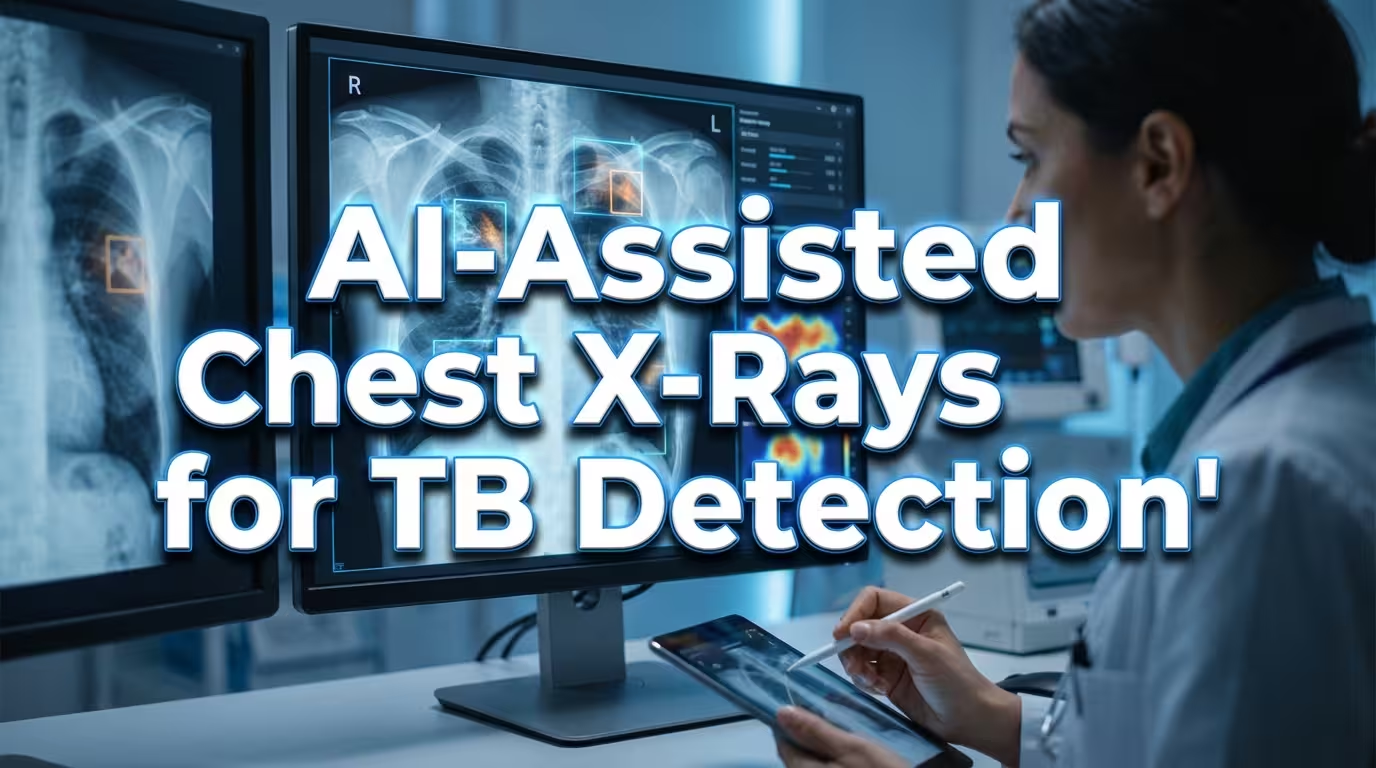
AI-assisted chest X-rays present a promising advancement in tuberculosis (TB) detection, particularly in low- and middle-income countries (LMICs), where access to imaging and medical expertise is often limited. This innovation addresses a critical public health challenge as TB continues to be a prevalent threat with millions of active cases globally and over a million associated deaths annually.
Healthcare Disparities and Imaging Accessibility
The existing global imaging gap exacerbates health inequalities, with approximately two-thirds of the world population lacking adequate access to imaging services. Notably, around 3.21 billion individuals reside in LMICs devoid of essential imaging facilities. The stark contrast with high-income nations highlights the severe scarcity of advanced imaging devices like CT and MRI scanners, as well as the shortage of trained radiologists. Consequently, barriers such as extensive travel distances and care delays further complicate timely diagnosis.
The Role of Chest X-Rays in Disease Screening
In LMICs, chest X-rays serve as a primary method for screening respiratory diseases, which includes TB, pneumonia, and even lung cancer. Being relatively low-cost and widely available, they play a pivotal role in the early identification of pulmonary conditions. This critical tool can effectively triage patients while contributing to comprehensive screening efforts.
AI Contributions to Tuberculosis Diagnosis
Recent findings indicate that AI-assisted chest X-rays can significantly enhance the accuracy and efficiency of TB screening programs. Enhanced AI interpretations have demonstrated a remarkable sensitivity increase in detecting thoracic abnormalities by up to 26%, while simultaneously shortening reading times by almost a third. Importantly, this technology can also flag abnormalities in asymptomatic individuals, which is vital since many confirmed TB cases do not exhibit overt symptoms. AI tools bolster active case-finding strategies, enabling more targeted mass screening efforts among high-risk populations.
Innovations for Remote Healthcare Delivery
Ultra-portable X-ray systems equipped with AI capabilities are making strides in accessible healthcare, allowing for outreach in remote communities lacking traditional infrastructure. This decentralized approach not only facilitates necessary diagnostics but also supports a more agile healthcare delivery model.
Broader Applications of AI in Diagnostics
Beyond TB detection, AI-enabled workflows in chest X-rays may also assist in identifying other significant health conditions like cardiomegaly and pulmonary diseases. This capability underscores the potential for an integrated multi-disease screening strategy, an increasingly important need as non-communicable diseases become more prevalent in LMICs alongside infectious diseases.
Challenges and Considerations for Implementation
Despite the promising developments, it is crucial to approach AI-assisted technologies with caution. The current evidence is largely derived from implementation studies and evaluations sponsored by technology developers, raising concerns regarding biases in algorithms, variable performance across diverse populations, and the risk of over-reliance on automated systems in settings where clinical oversight is scarce. Furthermore, infrastructure challenges—such as unstable electricity and internet connectivity—serve as significant hurdles that must be addressed before widespread adoption.
Future Directions for Healthcare Policy
While the integration of AI chest X-rays represents a forward-thinking solution to persistent diagnostic gaps, such integration must complement existing clinical expertise rather than supplant it. A strategic approach involves aligning these technological advancements with national digital health policies, investing in the necessary infrastructure, and establishing clear referral pathways. If implemented prudently, AI-assisted imaging stands to improve early diagnosis and expand access to healthcare, particularly for underserved populations facing the highest TB burden.
Reference: Vijayan S et al. Artificial intelligence-assisted chest X-ray for tuberculosis case finding in low- and middle-income countries: implementation experiences and impact. BJR Open. 2026;DOI:10.1093/bjro/tzag007.
Featured image: SOPONE on Adobe stock