
AI Glasses Restore Independence for Photographer
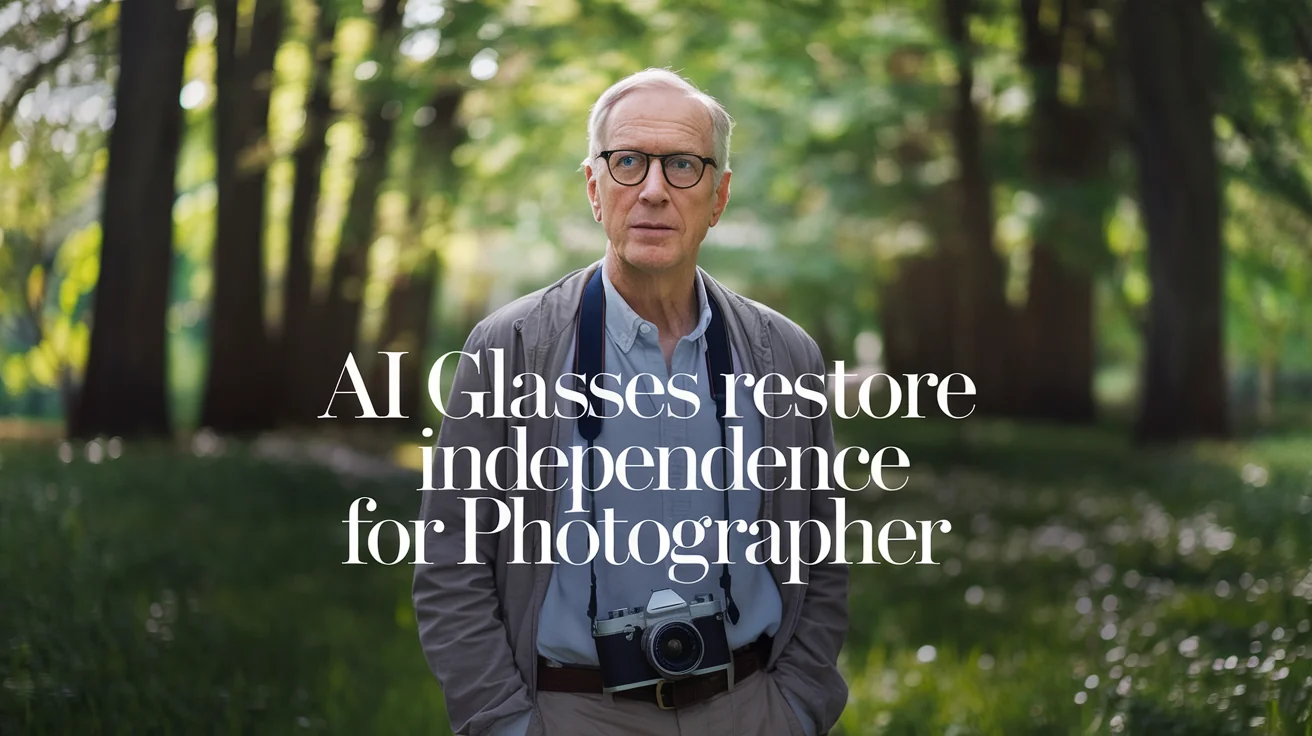
After a long career as a photographer, Jack McConnell, a Connecticut resident, has faced the difficult reality of gradually losing his eyesight due to diabetic retinopathy, a condition that has left him completely blind in one eye and only able to see light and dark shapes with the other. This dramatic shift has significantly impacted his life, making him retreat from the vibrant world of photography he once thrived in.
McConnell, who has spent over 50 years capturing images and interacting with diverse communities across the globe, shared how the disease has robbed him of the ability to appreciate the beauty he once recorded through his camera lens. “A year ago, I could see the trees across the way, with their incredible branches and leaves… Not anymore. It’s black. It’s dark gray. There’s nothing there,” he lamented.
In an effort to adapt to his situation, McConnell explored various options, ultimately leading him to the UCP of Eastern Connecticut, a nonprofit that assists individuals with disabilities. Here, McConnell was introduced to innovative assistive technologies, culminating in his interaction with the Meta AI glasses, a collaboration between Ray-Ban and Meta.
Shannon Taber, the center’s director of Inclusion and Accessibility, equipped him with these AI-powered glasses. Designed to look like regular sunglasses, the Meta glasses feature built-in cameras and speakers, capable of identifying objects, reading menus, and taking photos through voice commands. McConnell found the functionality of these glasses transformative, stating, “I really like these. Can I keep these for a while?” A four-week trial loan quickly turned into a significant adjustment in McConnell’s daily life.
Compared to other high-tech aids like the ORCam, which costs nearly $4,000, the Meta glasses come at a more accessible price of $400, yet affordability remains a constant challenge for many individuals in need of such assistive devices. Taber expressed the ongoing effort required to secure funding and partnerships to help provide such technologies for those who are often underserved in the community.
On a recent visit to the center, McConnell discovered more features of his glasses, directing them to describe images from a book of his past photography. This interaction allowed him to reconnect with his work, prompting him to share stories behind each picture once more. The glasses have proven pivotal in enhancing McConnell’s independence, enabling him to read menus, navigate grocery stores, and meet friends without feeling isolated.
Reflecting on his experience with the glasses, McConnell said, “I now have the glasses, and they do help me see where I am when I go out… I’m really looking forward to going out a lot more and getting out of the house.” His renewed confidence illustrates a significant transformation, and he even contemplates returning to photography.
In a world that can often feel constrictive for those with disabilities, the integration of AI technology like the Meta glasses can provide not only functional assistance but also a pathway to re-engagement with society. McConnell’s journey underscores the potential of these interventions to make profound differences in individuals’ lives, encouraging us to consider the broader implications of accessibility technology for all.”