
AI News Accounts Amplifying Dystopian Narratives
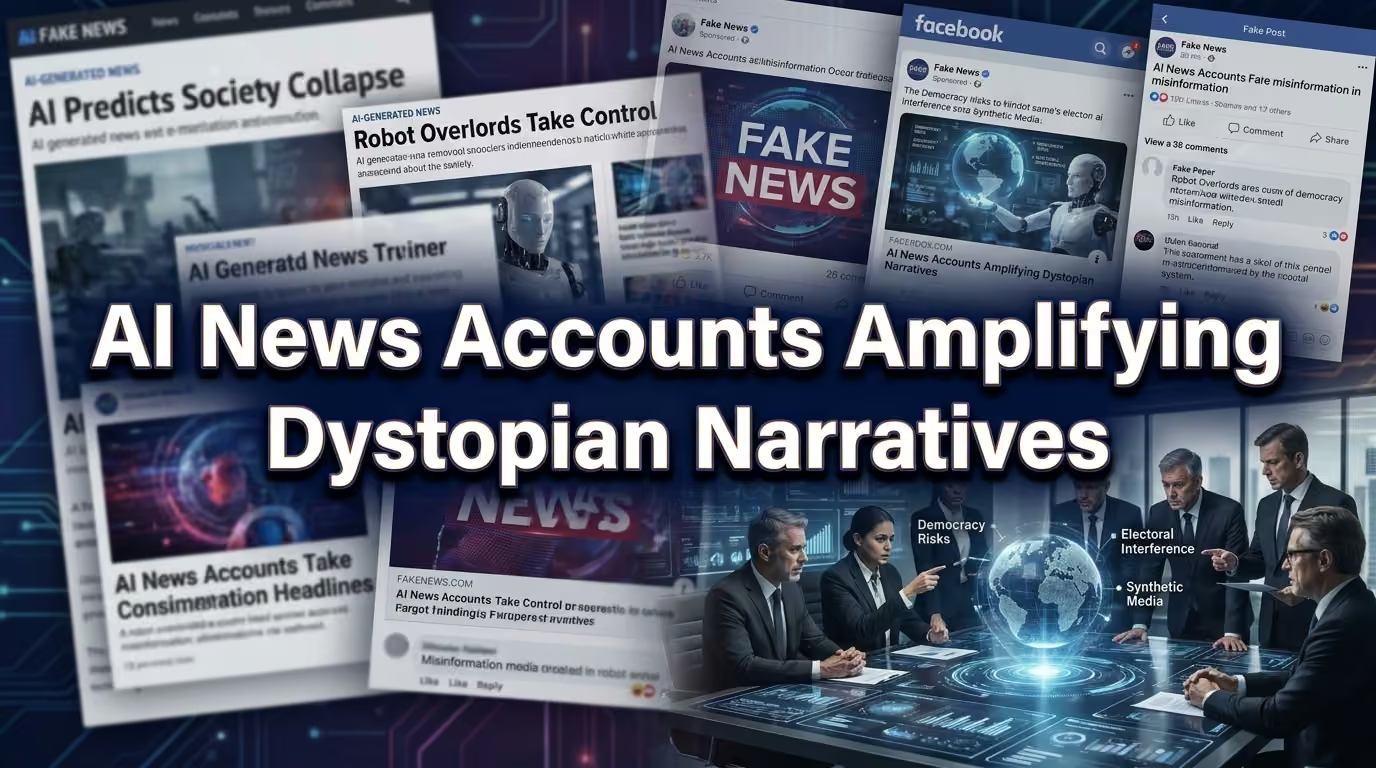
In recent months, an unsettling trend has emerged involving AI-assisted accounts spreading disinformation, particularly concerning blue states like California. This issue gained traction when President Donald Trump shared videos from a YouTube account claiming that Walmart was closing hundreds of stores in California—this assertion was proven false. The lack of clarity surrounding these videos, and their origins, alarmed California Governor Gavin Newsom’s communications team.
Newsom’s staff is particularly concerned as these accounts seem to target the governor, a likely presidential candidate for 2028. The proliferation of AI-generated spam content is seen as not just a nuisance but a concerning harbinger of sophisticated political manipulation. A YouTube channel, dubbed @MeganWright62, is illustrative of this trend; it features sensational videos generated by AI that falsely depict dramatic scenarios such as grocery stores running out of food or mass teacher resignations.
Despite their misleading nature, these videos appear credible to a segment of the public, evidenced by accommodating comments from viewers on the platform. This phenomenon points to a larger challenge—over 700 accounts have been flagged and removed by the governor’s office in collaboration with YouTube, which launched a ‘likeness protection’ program aimed at identifying unauthorized use of public figures’ images in deepfakes. More than 100 of these accounts were linked to AI-generated content that disseminated deceptive claims about California’s governance.
Brandon Richards, a spokesperson for Governor Newsom, highlighted the alarming implications of the current media landscape. He noted, “Right now, algorithms are rewarding lies and bad actors are taking advantage—particularly those who want to see a divided America.” Although Richards acknowledged that tech platforms have cooperated in addressing this issue, he warned that without systemic changes, the landscape is poised to worsen.
The intersection of advanced AI capabilities and political maneuvering, coupled with the tendency of consumers to engage with sensational content, creates an environment ripe for propagation of false narratives. The fight against such misinformation is critical, as the potential for AI to influence public perception and political stability has become a pressing concern.