
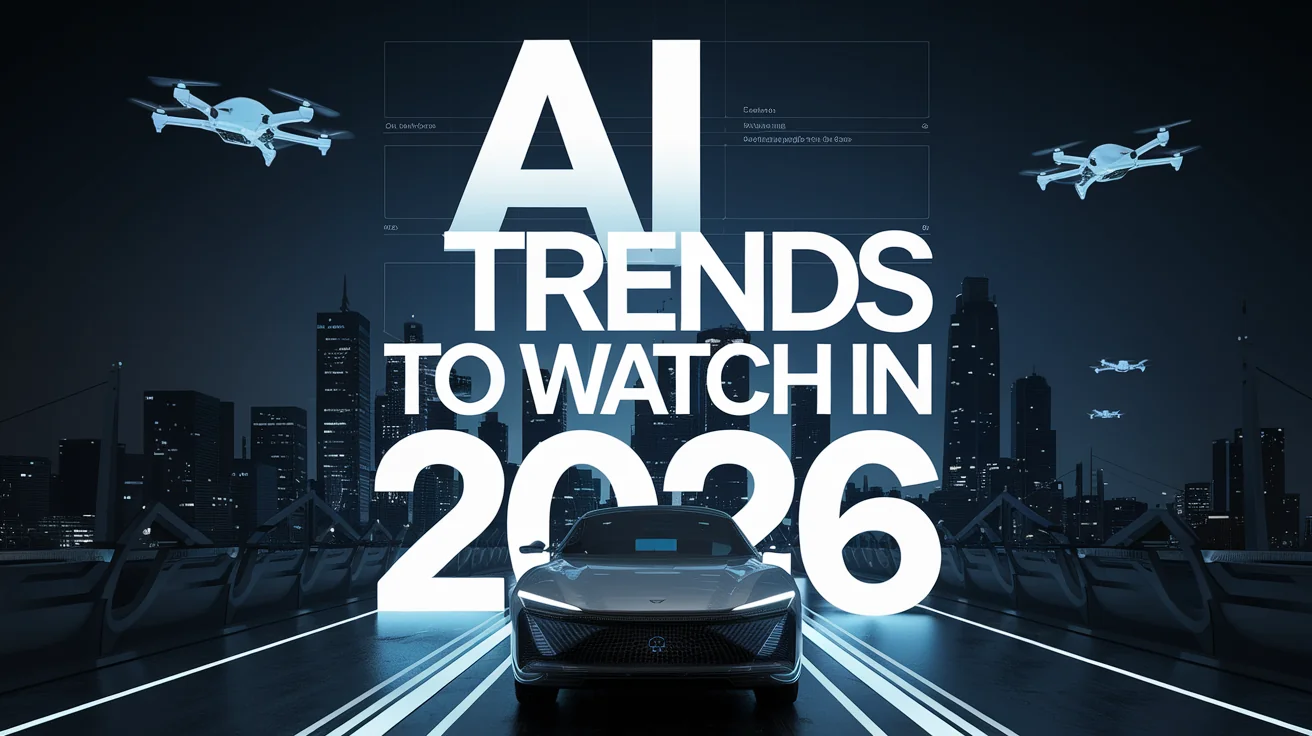
AI Trends to Watch in 2026
AI Evolving into a Collaborative Partner
AI is entering a new phase, one defined by real-world impact. After several years of experimentation, 2026 is shaping up to be the year that AI evolves from mere instruments to partners, fundamentally transforming how we work, create, and solve problems. Across various industries, AI is transcending its role of simply answering questions to actively collaborating with individuals and amplifying their expertise.
Transformative Impact Across Industries
This transformation is becoming abundantly visible. In the medical sector, for instance, AI is playing a pivotal role in closing gaps in care. In the realm of software development, it’s not only learning to code but grasping the context behind the code. Furthermore, in scientific research, AI is emerging as a true lab assistant. In quantum computing, innovative hybrid approaches are heralding breakthroughs once deemed unattainable.
Strengthening Security Measures
As AI agents begin to act as digital colleagues and take on specific tasks under human guidance, organizations must also strengthen their security frameworks to keep pace with the evolving risks. The infrastructural systems that support these advances are maturing, leading to smarter and more efficient operations.
Emergence of AI Agents
Aparna Chennapragada, Microsoft’s chief product officer for AI experiences, views 2026 as the dawn of a new era of collaboration between technology and humans. She notes that if recent years focused on AI’s capacity to answer questions, the forthcoming wave will center on genuine collaboration. “The future isn’t about replacing humans,” she declares. “It’s about amplifying them.”
AI Agents as Colleagues
Chennapragada anticipates that AI agents will become operational colleagues, facilitating productivity among small teams. She envisions scenarios where a trio can mount a global campaign within days, with AI shouldering the burdens of data curation, content generation, and personalization while humans retain strategic and creative oversight. This adaptation is likely to yield organizations that focus on symbiotic relationships with AI, enabling them to tackle larger creative undertakings and achieve quicker results.
Building Trust in AI
As AI agents proliferate and assume greater responsibilities within work settings, Vasu Jakkal, corporate vice president of Microsoft Security, emphasizes the necessity of fostering trust in these systems. Establishing security protocols will be essential to prevent potential risks, ensuring every agent possesses equivalent security protections as humans to mitigate exposure to potential threats. “Trust is the currency of innovation,” Jakkal underscores, making security initiatives a top priority as AI becomes more integral to operational workflows.
AI in Healthcare
Dr. Dominic King, vice president of health at Microsoft AI, asserts that AI in healthcare is reaching a pivotal moment. Predictions indicate a transition where AI will expand its expertise from diagnostics to include symptom triage and treatment planning. Such advancements are vital, particularly given the World Health Organization’s projections indicating a looming shortage of health workers. Tools like Microsoft AI’s Diagnostic Orchestrator, which previously demonstrated remarkable diagnostic accuracy, stand to significantly enhance individual control over health and wellness.
AI Revolutionizing Research
With AI already accelerating breakthroughs in various scientific fields, Peter Lee, president of Microsoft Research, foresees an upcoming leap where AI won’t merely assist in research but actively engage in the discovery process itself. Lee advocates that AI could eventually play a role in generating hypotheses, running experiments, and collaborating with human researchers, thereby transforming the framework of scientific discovery.
Innovations in AI Infrastructure
Mark Russinovich, chief technology officer of Microsoft Azure, highlights a shift in focus toward maximizing computing power efficiency. As opposed to merely increasing the number of data centers, the new AI infrastructure paradigm entails densely packing computing power within distributed networks. Such innovations promise not only enhanced efficiency but also a drive towards sustainable AI developments on a global scale.
Advancements in Software Development
The software development landscape is witnessing unprecedented growth, with platforms like GitHub experiencing a remarkable surge in activity. Mario Rodriguez from GitHub suggests that this increase signals a defining shift towards AI-driven repository intelligence, allowing for smarter suggestions and error detection based on the historical context of code changes. This evolution will enable higher-quality software development and faster iteration.
Quantum Computing and AI
Jason Zander, executive vice president of Microsoft Discovery and Quantum, discusses how quantum computing is transitioning from an elusive goal towards practical implementation. As hybrid computing models emerge, combining quantum, AI, and supercomputers, the potential to address complex global challenges becomes increasingly viable. Developments such as Microsoft’s Majorana 1 quantum chip mark significant strides towards robust quantum systems, signifying that the intersection of quantum computing and AI will redefine the future landscape of science and technology.
Future Possibilities with AI and Quantum Computing
As AI continues to advance, its collaboration with quantum computing holds paramount importance. Zander asserts that the future of AI will not merely be defined by speed but by fundamental breakthroughs that enhance our capabilities across multiple sectors, including materials science and medicine. This forecast paints a picture of an inventive future shaped by the harmonization of AI and quantum technologies.
Lead image created by Kathy Oneha / We. Communications. Illustrations produced with Create in Microsoft 365 Copilot.