
Biometric Identity Technology: Will Eyes Replace IDs?
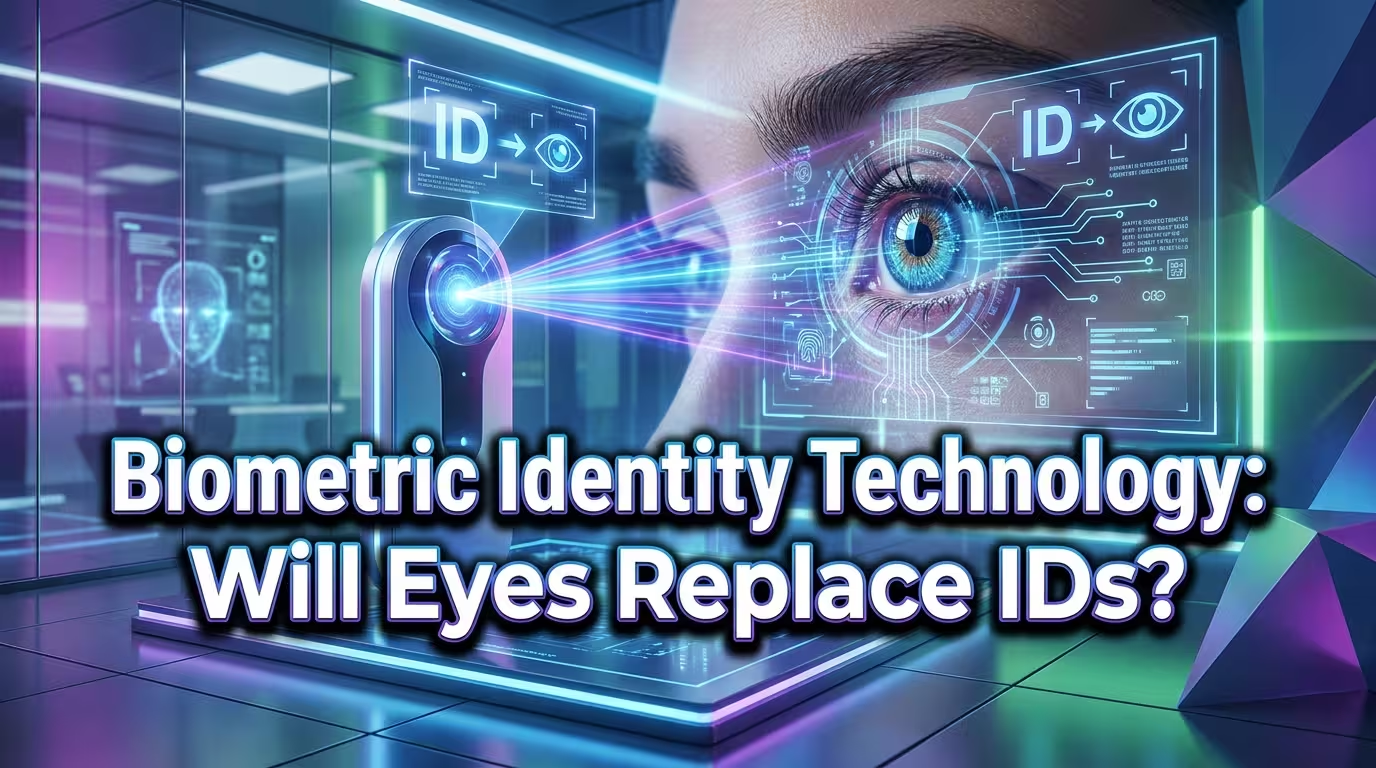
A new biometric device known as the Orb is making waves for its innovative approach to verifying human identities online by scanning people’s irises. Developed by Tools for Humanity, a company co-founded by OpenAI CEO Sam Altman, this technology aims to provide a verified digital identity in an age where online bot activity poses significant challenges. The device not only captures an image of a user’s face but also their iris, which is then encrypted and sent to the World ID app to confirm their humanity.
According to Trevor Traina, chief business officer at Tools for Humanity, the Orb employs multiple sensors to ensure identity verification. “The Orb takes our photo and uses sensors to prove that we are three-dimensional human beings,” he explained. The initiative has gained traction, with more than 18 million users already on board and major platforms like Zoom and DocuSign beginning to integrate this technology into their systems. This implementation is particularly promising for event organizers looking to combat ticket scalping and ensure that purchases are made by actual people rather than bots.
Traina highlighted the system’s emphasis on user privacy, stating that the Orb does not retain personal data in a traditional database. “The Orb is not storing your data. It issues you an ID on your phone, which remains under your control. After the image is captured, it’s destroyed on our end,” he clarified, elaborating on the security measures in place to prevent hacking. The data captured is ‘sharded,’ meaning it’s divided and managed by universities globally, eliminating concerns over a single, vulnerable database.
Despite the promising features of this biometric technology, concerns around privacy and security persist. UC Law Assistant Professor Zac Henderson cautions against the risks associated with biometric data, emphasizing its permanence. “If your biometric data gets into someone else’s hands, that’s it. There’s no going back,” he warned. This concern illustrates a significant difference between biometric data and more mutable identifiers, such as passwords or Social Security numbers.
Public reaction has varied, with individuals like tourist Simen Bakken expressing both intrigue and apprehension regarding the technology. “It’s a more accessible way of ID, but it’s also a little bit scary,” he reflected. Meanwhile, users like Paul Volfovski seem optimistic, suggesting that widespread adoption of such systems is likely. “I don’t think it’s avoidable. You’ve got to get on the bandwagon,” he remarked.
The launch of the Orb represents a leap forward in biometric verification technology, promising to confront the growing problem of online bots. However, the balance between enhanced security and potential threats to personal privacy continues to spark essential discourse as the technology matures.