
Honda Introduces AI-Equipped Autonomous Vehicles
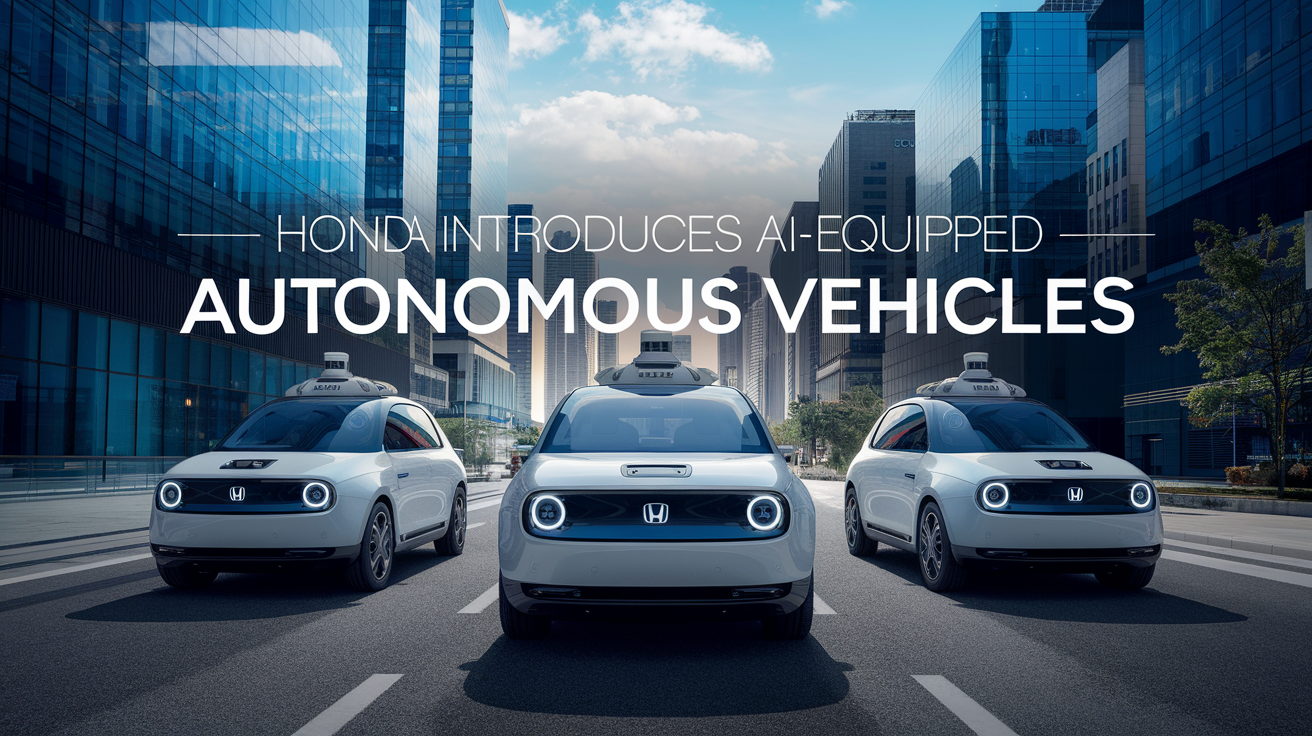
Tokyo— Honda Motor Co. is on the verge of delivering groundbreaking hybrid and electric vehicle models integrated with AI-powered self-driving technology, set to launch in Japan by fiscal 2027. This revelation was shared during a recent dealer meeting, highlighting Honda’s commitment to innovation in the automotive sector.
In a concerted effort to advance its autonomous vehicle capabilities, Honda has partnered with a U.S.-based AI startup, Helm.ai, to create a unique autonomous driving system. This technology enables vehicles to navigate complex urban landscapes and remote areas efficiently, which addresses a critical challenge faced by many automakers seeking to achieve full autonomy.
While currently, U.S. and Chinese companies dominate the AI-equipped autonomous EV market, Honda is gearing up to compete. By integrating its AI-driven self-driving system into hybrids, Honda aims to tap into the growing demand for environmentally friendly and technology-rich vehicles. The first models to benefit from this technology will be the hybrid version of the Vezel sports utility vehicle and a Saloon EV, both debuting in fiscal 2027. Additionally, expanding this technology to Kei lightweight cars and models targeted for the U.S. market is also under consideration.
The self-driving system stands out for its unique capabilities; it merges Honda’s automotive expertise with advanced AI functions, allowing the vehicle to steer and accelerate based on real-time data from onboard cameras. Notably, this approach circumvents the need for high-precision 3D maps typical of conventional autonomous technologies, potentially lowering production costs and accelerating the deployment of these innovative vehicles.
At the meeting, Honda President Toshihiro Mibe articulated a consumer benefit, stating, “You can experience the feeling of having a car automatically take you to your destination.” Such a development aligns with broader trends in electric vehicles, which are naturally more conducive to AI applications due to their electronic control systems. However, Honda’s hybrid strategy indicates a significant shift, paving the way for widespread adoption of autonomous driving technology beyond purely electric vehicles.
Insurance estimates in Japan show that EVs constituted just over 1% of new car sales in 2024, in contrast to hybrids, which held a dominant market share exceeding 60%. This statistic underscores the potential for AI-enhanced hybrids to accelerate the acceptance of autonomous technologies within the Japanese automotive landscape.
The race for dominance in AI-driven self-driving technology is heating up, both in Japan and internationally. Notably, Tesla Inc. and its counterparts in China remain at the forefront of this industry, while Nissan Motor Co. is also planning to introduce an AI-powered self-driving vehicle in fiscal 2027, further intensifying competition.