
McDonald’s Pulls AI Christmas Ad Amid Backlash
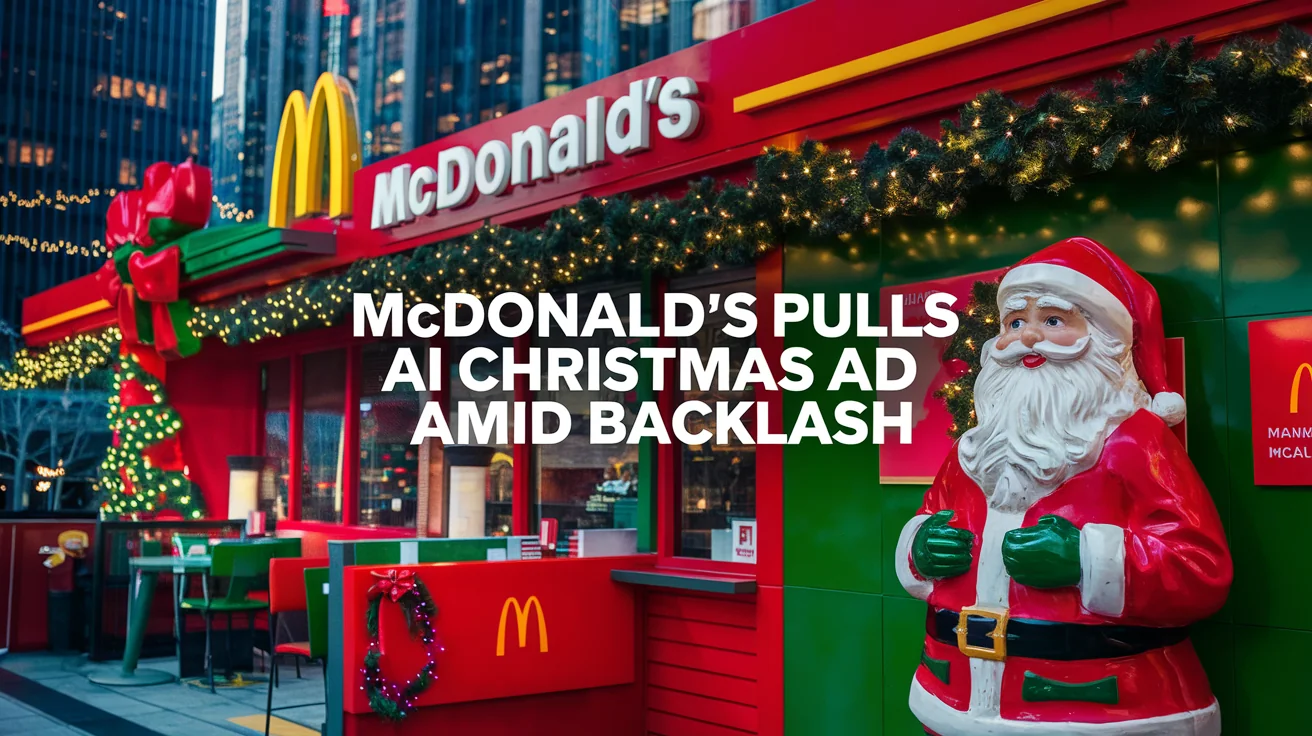
McDonald’s has decided to remove a Christmas advert created with Artificial Intelligence (AI), following a significant backlash from viewers online. The 45-second video, produced with generative AI clips, was released on McDonald’s Netherlands YouTube channel on December 6, aiming to highlight the challenges of the holiday season.
However, the advert drew sharp criticism on social media. Many viewers expressed their discontent, with one commenter calling it “the most god-awful ad I’ve seen this year.” In response to the negative feedback, McDonald’s Netherlands took the video down on December 9. In a statement to BBC News, the company described this experience as “an important learning” as it continues to explore “the effective use of AI” in its marketing strategies.
The production of the advert involved the Dutch company TBWANeboko and the US production firm The Sweetshop. It depicted the misfortunes that can ensue during the Christmas holiday, adhering to the slogan “the most terrible time of the year”, while suggesting that the season is better spent enjoying food from the fast-food chain. Nevertheless, the AI-generated characters and the hodgepodge of clips were seen as “creepy” and “poorly edited,” further fueling the criticism.
Viewers were particularly concerned about the potential job displacement in the filmmaking industry, with one comment highlighting, “No actors, no camera team… welcome to the future of filmmaking. And it sucks.” This sentiment reflects a broader anxiety about AI’s role in creative fields.
Following the advertisement’s removal, The Sweetshop’s CEO Melanie Bridge defended the artistic process behind it, stating that the production took seven weeks, yielding “thousands of takes” which were then meticulously edited. She maintained that the project required significant effort and was not merely a product of AI manipulation, asserting, “This wasn’t an AI trick; it was a film.”
Despite the backlash faced by McDonald’s, the trend of incorporating AI into advertising continues to grow among notable brands. For instance, Coca-Cola has successfully launched its second AI-generated Christmas ad, suggesting that public perception may vary significantly from campaign to campaign. In a twist of irony, a report from analytical company Social Sprout indicated a 61% “positive sentiment rating” for the ad across social media, demonstrating that reactions to AI-generated content can be both polarizing and complex.
Nonetheless, McDonald’s decision to remove the ad reflects a cautious approach in the evolving landscape of AI-driven marketing. Companies like Valentino have also faced scrutiny over AI involvement in their campaigns, criticized for seeming “cheap” and “lazy.” As the advertising sector grapples with these challenges, the balance between innovation and public reception remains crucial.