
Peter Thiel’s Investment in AI Cow Collars
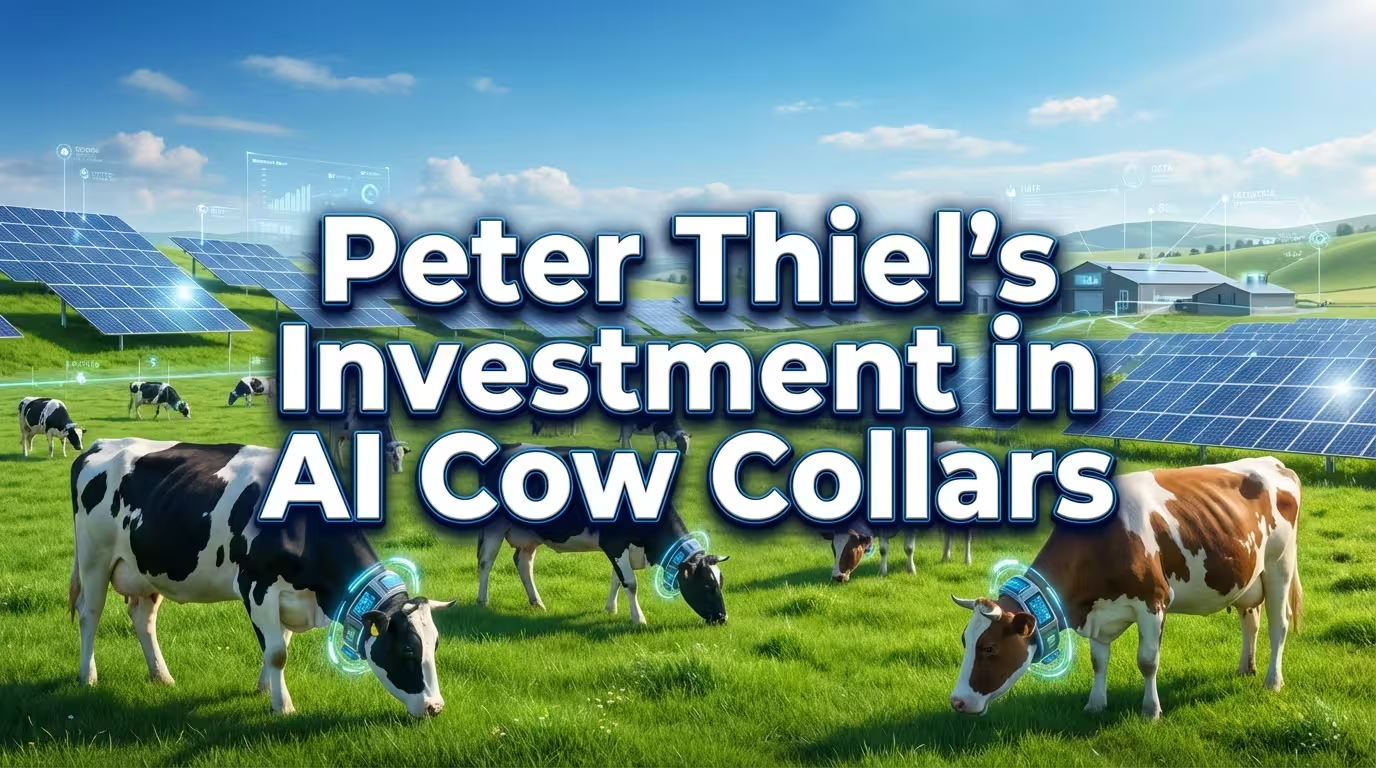
In an intriguing development for the agriculture sector, a New Zealand-based artificial intelligence startup named Halter is making headlines with its innovative AI-powered cow collars, which may soon reach a valuation of over US$2 billion (C$2.8 billion). Billionaire investor Peter Thiel’s Founders Fund is reportedly leading a new funding round for Halter that has garnered significant interest from various venture capital firms, highlighting a notable trend in agricultural technology investment.
This development is particularly relevant for Canadian investors, as it signals robust capital flow into agriculture technology at a time when Canadian beef prices are soaring and ranchers seek efficient solutions to maintain productivity amidst rising costs.
What Halter Actually Does
Halter’s smart collars are solar-powered devices that create virtual fences for cattle, allowing farmers to monitor their herds through an application on their smartphones. The collars not only track location but also gauge health indicators and facilitate remote movement of cattle using vibrations and audio cues. Craig Piggott, the founder of Halter, emphasized that the primary aim of this technology is to enhance sustainability and productivity in pasture farming.
Challenges and Opportunities for Canadian Farmers
The Canadian cattle industry stands at a critical juncture, with a recent decline in national herd numbers exacerbated by factors like drought, high feed and labor costs, and an aging farming population. In 2025, retail prices for Canadian beef surged by 16%, and projections indicate stable or even elevated prices in the near future. Given these circumstances, innovative technology like Halter’s collars offers a compelling solution to meet new challenges faced by farmers.
Farm Credit Canada (FCC) has recognized this potential and is committing US$2 billion through 2030 to promote innovation in agtech, highlighting the growing importance of technological advances as a means to drive efficiency in agricultural practices.
The Broader Context of Agtech
Despite some challenges faced by agricultural tech startups globally, precision agriculture—a field that aims to use technology for smarter farm management—continues to show promise. The global precision agriculture market is anticipated to grow from US$9.5 billion in 2025 to over US$17 billion by 2031, with Canadian precision farming projected to rise from US$1.5 billion in 2023 to US$3.7 billion by 2030.
Innovative solutions like Halter’s smart collars exemplify the potential for technology to stabilize food supply and perhaps mitigate price fluctuations for consumers, though the precise effects of such innovations will evolve over time.
Investment Opportunities for Canadians
While Halter remains a private entity, Canadian investors interested in agriculture technology can still explore publicly listed companies actively involved in precision agriculture. Nutrien Ltd., for instance, is well-positioned in this space and provides numerous agtech solutions to a large network of growers.
Additionally, major firms such as Deere & Co. and Merck & Co. are notable players in precision farming strategies, contributing to technological innovations that are likely to impact cattle management and agricultural practices significantly.
Final Thoughts for Canadian Investors
The factors influencing Halter’s rising valuation—labor shortages, high beef prices, and the necessity for innovative farming solutions—are salient challenges faced by Canadian farmers as well. Investors may consider various avenues, from Canadian agritech equities to U.S.-listed shares, to align with this growing theme. The increasing relevance of agriculture technology makes it a sector worthy of attention as it adapts to current demands and forecasts future needs.